AI for marketing teams – from solo prompts to shared workflows
by Caroline Andersson
Key takeaways
- Having team members prompt isolated in separate tools often creates an inconsistent tone of voice and time-consuming cleanup.
- A closed, custom AI system that integrates both business and brand can cut over 60 percent of the lead time from idea to publishing.
- Successful AI efficiency is all about automating repetitive bottlenecks while letting the team keep full creative control and judgment.
Letting the marketing team work in separate prompt windows rarely leads to real efficiency. Instead, it often produces generic content, fragmented tone of voice, and unnecessary extra work. Real AI efficiency is achieved when the team unites around shared workflows and tailored tools where tech and brand strategy live under the same roof. By letting technology handle monotonous intermediate steps, you free up valuable time for strategy and quality assurance.
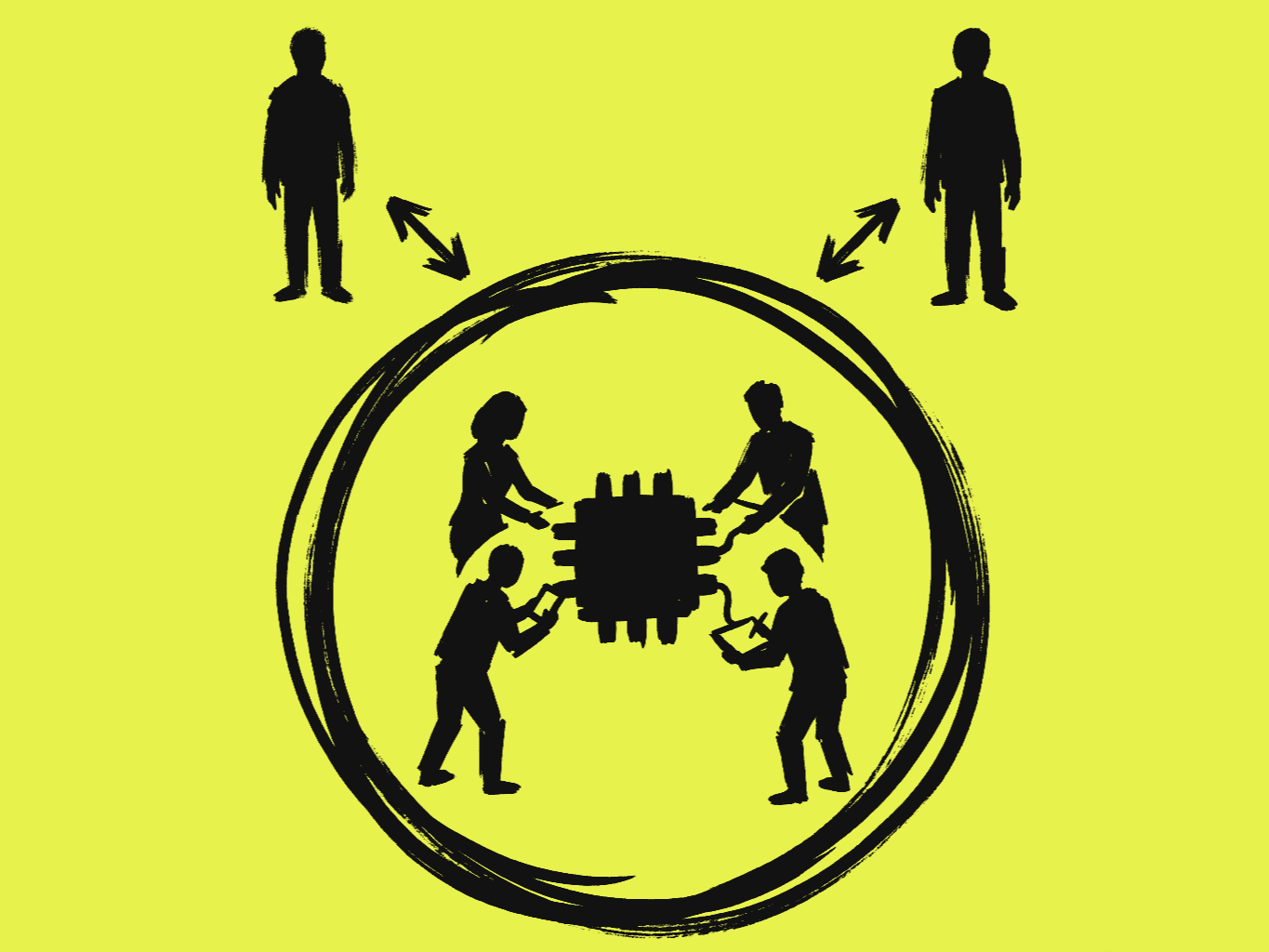
Why marketing teams miss out on impact when prompting individually
It is Monday morning, the calendar is packed, and that important article or social post that should go out ends up at the bottom of the to-do list once again. Not because of a lack of ideas – but because the journey from concept to draft to approved, on-brand, and designed asset simply has too many bottlenecks along the way. Sounds familiar?
Many marketing teams have already tried tackling time crunches with generative AI tools. Individual team members often feel genuinely productive in the moment, but having everyone sit in their own prompt window rarely creates genuine efficiency. On the contrary, it often introduces new headaches:
An inconsistent tone of voice that does not reflect your brand
Generic copy without any clear link to your actual business
Endless copy-pasting between disparate software for text, imagery, SEO, and planning
The problem with workslop
Workslop is the term for AI-generated material that looks finished at first glance, but is not. In a study from Optimizely, 76% of interviewed marketing leaders stated they lose at least 3 hours every week correcting, fact-checking, and reformatting AI output.
MIT's report The GenAI Divide points in the exact same direction. Most AI initiatives fail to deliver measurable impact on the bottom line, and a primary reason is that the tools do not fit into how people actually work. The problem is rarely AI itself, but rather that it is used in an unstructured, scattered way.
An engine that understands both business and brand
At Bombayworks, we faced this exact challenge. Our digital consultants hold a wealth of knowledge, but client projects always come first, meaning our own marketing efforts often stalled due to time constraints. So we brought together our experts across strategy, UX, development, and content to build a tool where technology and brand strategy live under the exact same roof.
The solution became a closed, tailored AI system that reuses all our collective knowledge across different contexts at just the right moment: the Marketing generator.
– AI works best when used deliberately. For a team, the impact is massive as soon as tech and strategy come together in the same tool, says Olof Broddesson, AI Product & Project Manager at Bombayworks.
Humans at the wheel – tech as the co-pilot
AI efficiency should never replace human touch and judgment. Instead, AI should remove the tedious steps so the team can focus on strategy, craft, and the joy of creating. The human and the team always have the final say in the Marketing Generator, while quality-assured support falls into place automatically along the way.
Here is how we cut over 60 percent of the lead time from idea to publishing:
Industry monitoring without the blank page: Instead of starting from scratch, the tool continuously scans relevant industry sources and trends, filters out noise, and matches news directly to our own offerings. With a single click, a trend spotting turns into a first draft.
Built-in tone of voice guard: To ensure copy never sounds robotic or generic, every draft is automatically vetted against our brand profile and tone of voice rules. The tool catches clichés, clunky jargon, and suggests concrete rewrites – but human judgment always gets the final call.
Multi-channel assets and design in one view: An approved master draft adapts instantly for LinkedIn, Instagram, web articles (including SEO and GEO metadata), or newsletters. In the built-in image studio, illustrations and visuals are generated using the right typography, palette, and format – without anyone having to open external design software.
– The beauty of a closed system is that the AI already knows your business, your past articles, and your tone of voice before you even start writing. That saves you from spending hours tidying up generic text afterwards, says Olof Broddesson.
Map your team's bottlenecks for a successful rollout
How new tools and setups are implemented makes all the difference. According to the MIT report, AI initiatives built alongside a specialised partner succeed in roughly two out of three cases. When companies build entirely on their own, only about one in five succeed.
– Many purchase a new AI licence and hope the problems will solve themselves. But to see real impact, you have to start with how the team actually works, identify where time slips away, and build away those exact friction points, says Olof Broddesson.
We bring our long-standing expertise in digital ways of working and shared workflows into our client collaborations. Recently, for example, we helped the newly launched newspaper Skånes Folkblad go from idea to a complete, AI-assisted editorial tool. By mapping their editorial workflows and removing time-consuming intermediate steps, a small newsroom can now operate with high precision and focus their energy on quality journalism rather than administration.
Three questions to discuss within your team
Where do you lose the most time between idea and publishing? Start right there, rather than adopting tools without a plan.
Are your tone of voice and brand guidelines documented clearly enough for an AI to follow? If not, start with that foundation.
Are you using AI individually or together? A shared prompt library – instructions accessible to the entire team – is a simple first step.
The takeaway is straightforward: AI delivers the greatest value when used deliberately across the entire team, inside tools designed around your actual workflows.
– When technology takes care of the repetitive heavy lifting and the team retains judgment, something wonderful happens to both velocity and energy. That is when AI turns into a true colleague in the marketing team, says Olof Broddesson.
Curious about how a tailored AI tool could remove bottlenecks for your marketing team? Reach out to us at Bombayworks, and we will gladly show you how the Marketing Generator works in practice, and how it can be adapted to your specific needs.